** NOTE: Be sure to take a peek at our new "Forum" tab at the top. We're still in the beginning stages, so expect a few glitches. Please spread the word! The more the merrier!**
By Amber of Drexel, MO
* The following recipes use measurements for dried herbs unless otherwise specified. If you wish to use fresh herbs, use half the specified amount.
Example: If a recipe calls for 2 tsp dried basil and you want to use fresh you would use 1 tsp fresh basil. The oils are not concentrated in the dried as herbs lose potency in the drying process.

- If using dry herbs, look for those that have the same tint as when alive. They should not be grey (save mugwort, sage and herbs that are naturally grey when alive).
- They should have a STRONG scent when the jar is open. If you go to a shop ask to smell the herbs - even if you don’t know what they should smell like. They shouldn’t have a faint smell or a perfumey smell either. They should smell earthy and floral.
- Another sign of a reputable shop are individually priced essential oils– for instance Lavender and White Pine are generally not the same price.
- After 6 months the medicinal value of most dried herbs decreases.
- Any of these herbal teas are also great for people!

* The following recipes suggest measurements for dried herbs unless otherwise specified.
Respiratory Tea
Used for wheezing, sneezing, runny nose, and chest congestion.
3 tsp Astragalus root
1 tsp lavender
2 tsp chamomile
2 tsp nettle
1 tsp peppermint
- In a med saucepan bring 5 cups of water and the astragalus root to a boil - boil for 3 mins.
- Take it off the burner, add other herbs and cover.
- Let sit 5-15 mins. (The longer you let it sit the stronger it will be.)
- *It is important to cover the pot to keep the essential oils in. the oils hold the benefits of the herbs.
- Strain the mixture into a container.
- Allow to cool.
Serve for 5-7 days.
Rule of thumb – continue to serve for 3 days after the symptoms are gone.

Infection Fighter
2 tsp Echinacea (immune system boosting and attacks bacteria)
2 tsp goldenseal (kills a wide range of bacteria and fungi)
1 tsp minced garlic (highly antimicrobial, fights bacteria, fungi, viruses and parasites)
2 tsp licorice root (anti inflammatory, eases cough and nourishes adrenal glands)
1 tsp marshmallow root (soothes inflamed mucus membranes, mildly stimulating for the immune system)
- In a med pot, add 7 cups water and the Echinacea, garlic, licorice and marshmallow root.
- Simmer for 3-5 minutes with cover on.
- Remove from heat and add goldenseal.
- Cover and let sit 5-10 minutes. (The longer it sits the stronger it gets.)
Let sit until it cools to room temperature
Fill a gallon waterer half way with tea and add warm water the rest of the way.
Save the rest of the mixture in the refrigerator in a tightly covered container.
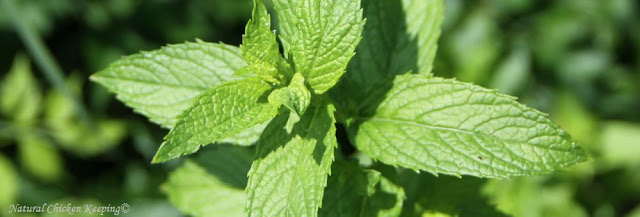
fresh mint
Wound Wash
My favorite wound wash is witch hazel with 10 drops of lavender essential oil added.
Infused Herbal Oil Salve
Make an infused herbal oil by mixing:
3 tsp calendula
3 tsp comfrey
3 tsp st. johns wort
3 tsp lavender
2 cups of olive, safflower or jojoba oil.
- Let sit for 2 weeks, shaking once a day.
- Strain
- Add 1/4 cup beeswax per 1 cup infused oil.
- Heat until beeswax is completely melted (low and slow is best here)
- To test texture, put 1 tsp of the mix in a small glass bowl and put in freezer to set up for a few minutes. Test the texture. If it is too soft, add more beeswax - too hard, add oil.
- While the finished product is still hot pour into jars or tins.
- Store in cool dark place.
Ordinary Corn Starch works wonderfully to stop bleeding from minor wounds and scratches.

Another Note:
Lavender essential oil is a very important item that every natural chicken keeper should keep in the first aid box - the real, organic stuff. It is antibacterial, antibiotic, reduces pain, swelling and bleeding. It is your complete “go to” product for injuries.
I use it on my kids boo-boos and of course my own. It is gentle enough to use it on an infant without cutting it with a carrier like olive oil.
For calming, I like the oil because you can just dab some on. You can put a drop on a tissue to smell, or a drop on your pillow.
I make lavender tea cookies (there is no tea in it - they are “tea cookies” with lavender in them) I love them. You can put the oil with some water and a bit of witch hazel in a spray bottle and spray it around the house, and that same solution can be used in your hair or as a face wash. It is so gentle and easy to use!
I also like the dried lavender flowers for tea.
More information on herbal remedies:
A Compendium and Workbook of Management, Nutritional, Herbal, and Homeopathic Remedies
Compiled and Edited by Karma E. Glos
Need to buy herbs? See these online stores:

Brief description of various healing herbs:
Lavender essential oil is a very important item that every natural chicken keeper should keep in the first aid box - the real, organicstuff. This gentle little flower does it all. It is antibacterial, antibiotic, reduces pain, swelling and bleeding. It is your complete “goto” product for injuries.
I use it on my kids boo-boos and of course my own. It is gentle enough to use it on an infant without cutting it with a carrier like olive oil.
For calming, I like the oil because you can just dab some on. You can put a drop on a tissue to smell, or a drop on your pillow.
I make lavender tea cookies (there is no tea in it - they are “tea cookies” with lavender in them) I love them. You can put the oil with some water and a bit of witch hazel in a spray bottle and spray it around the house, and that same solution can be used in your hair or as a face wash. It is so gentle and easy to use!
I also like the dried lavender flowers for tea.
Rosemary- antiseptic, astringent, circulatory stimulant. It promotes healing and kills bacteria
Thyme- Great antibacterial, antibiotic, antimicrobial,. Its a great wound herb and great for colds and flu
Sage- Astringent, tonic, is a great infection fighter, fights colds and fever, clears congestion, soothes sore throats
Basil- astringent, infection fighting, great for acne, calms the nerves
Chives--- I just eat them
Parsley-rich in vitamins, reduces fever, allergy symptoms
Echinacea- Take internally Echinacea is great immune system builder. Topically it helps the body repair wounds. Stimulates the white blood cells which destroy bacteria, viruses, and foreign invaders also activates the production of a protein interferon which protects cells against the invasion of viruses.
Garlic- strong antibiotic, expectorant, antihistamine, great for colds and respiratory infections
Mint-
Peppermint- digestive tonic, antiseptic, pain relieving, calms upset stomach,
Spearmint- Good for relieving cold symptoms, headaches, great for indigestion


Wildcrafting Wednesday Blog Hop
*


