Showing posts with label BOSS. Show all posts

Sunday, December 9, 2012

Natural Feeding Cycles for Chickens


By Bee:

Going to talk a little aboutnatural feeding cycles because I think it's an important part of the natural health of chickens.  Over the years I've noticed certain things about how chickens live on free range and the trends in their production levels and such, so I try to mimic those trends and cycles as much as possible and it makes for a predictable flock. 

In the natural diet of birds, their lives are pretty much focused around survival of the species according to how much nutrition they can find at any given times of the year.  Do you ever wonder why wild birds only produce offspring in the spring?  Or why most wild animals don't give birth in the fall or winter?  It has to do with food abundance and survival instincts that are deeply ingrained. 

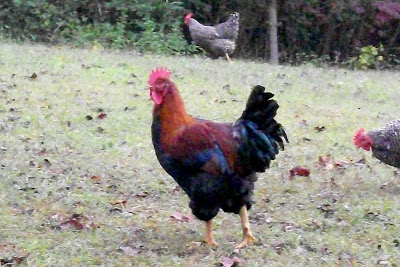
 (Photo by "Aoxa")

In the summer there is plenty of food clear up into early fall.  In the early fall is when the types of food available are the kinds that will put fat onto an animal... seed dispersal from trees, fruit trees go to seed as well in the form of fruit, fall fescues and other perennial grasses, etc.  This allows animals to go into winter with a good layer of fat to sustain them when food sources are lean. 

As late winter moves into very early spring the food slowly becomes more plentiful as new buds arrive, insects come out of larval stages, and new grass begins to grow.  You all know that and it goes without saying... unless I am trying to relate it to my own flock's nutrition levels that I provide. 

In the spring, chickens go into their peak egg laying production and they will lay better in early to late spring better than any other time of the year.  Food supplies in the wild are plentiful and wild birds are hatching young.  There is an abundance of food for energy to feed young birds.  This is when chickens that are raised on this natural rhythm will go broody the most.


This is also the time I usually go to a 100% laying ration to support the cycle of reproduction and I normally keep that all through spring and into part of the summer. Then in late summer I start to taper off on the layer ration as the birds go into a natural slowdown. I leave enough of the layer ration to help through the worst of the molt and I add a little BOSS (black oil sunflower seends)... not too much but a little.  This adds some fats into the supplemental feeds. 

In late fall and early winter I go to 40% mash, 60% whole grains, but taper off on the BOSS.  By January I am feeding no BOSS but still the mixed ration as to simulate that lean time of the year and in mid-February I start to taper off of the whole grains and work my feed mix back towards the 100% layer ration to do it all over again.  

By the time the girls are in full swing of lay and wanting to hatch chicks, they are eating high on the hog outside while I supplement with 100% layer ration.


I said all that to make this point ~ if you are wondering where your chicken's nutrition should be, whether they be coop/run dwellers or out on free range, always look to nature for your answer.  You don't have to worry about exact percentages of this or that because you know that formulated layer feeds have all the essential nutrients needed for high production in laying. 


Whole grains have a less total nutrition than the layer ration so cutting your layer mix with them will bring your nutrition levels down a little, but that's okay.  When you feed this mix you will find the birds actually consume less feed, which seems contrary for winter time but it just works that way.  No matter the whys but I'm thinking it has to do with more fiber in the diet and they have lower activity levels to support.  

In conclusion, looking to nature will tell you when to feed what to your chickens if you are providing more than half of their total nutrition, which most folks already are.  More nutrition when they are in reproduction mode/months, less nutrition when they are in survival mode/months, with a slow tapering into each season so as to let them transition as they would in the wild.  

I see a lot of people hopping up their nutrition during the winter months to keep their chickens "warm" ~ which is totally unnecessary.  Do wild birds have high protein and fats in the winter?  No, they don't because they simply don't need it ~ they are living off their stored fat from late summer/early fall.  I am feeding the lowest level of nutrition at the same time everyone else is increasing theirs ~ and feeding higher levels when everyone drops theirs, because they think the birds don't need it as much when the warmer months have arrived.  
 

Then there are the groups that overfeed nutrients throughout the year because they just love overindulging their pets.  Those are the folks who are not managing flocks, they are feeding pets. 

I believe this trend to feed the wrong level of nutrients during the wrong times of the year is another reason why people are not getting maximum laying, are having erratic laying cycles and reproductive problems in their birds, having broodies in the fall and winter and having health problems in their flocks.  

I wanted to point out that my increasing the nutrition for my own flock into late fall and providing extra fats in the form of suet cakes, calf manna and BOSS was only due to their weakened and underweight status upon their arrival (see the story of The Gnarly Bunch here).  I didn't want those following this blog to think that this regimen should be a normal part of a flock's nutrition at this time of the year. 


Before reclaiming the Gnarly Bunch, I don't recall ever feeding suet or calf manna to my flocks.  Just didn't need to and a normal flock doesn't need them at any time of the year.  Just plain layer rations and whole grains usually suffice, with a little lacing of BOSS in the early fall.  This method has kept my chickens healthy for all these many years and my laying at peak production, with no health issues to speak of.  

Sorry if this ran on a little long but I thought it needing saying.

Bee -


Leigh Says:

Bee sure to check out our fun, new “Natural chicken Keeping” products!
 

create & buy custom products at Zazzle

Friday, November 9, 2012

Gnarly Bunch - Chapter 14 - 10/2/12


10/2/12

Pics of the Gnarly Bunch, 2 weeks into their reconditioning:


 This is a Barred Rock foraging in the white dutch clover planted over my garden bed rows...they hit this area several times a day but especially in the evening.


Today...I threw down some Boss (black oil sunflower seeds) to get them all in one area...not the greatest pic but shows them getting some sheen and fullness back to their feathering...just a little. 


Toby..gettin' his strut on! 
He's getting there.... his cock feathers are gone and he is about 3-5 lbs underweight.  When he gets his bulk back and his full plumage he is a sight to behold.  You can see even in this pic where his chest muscles are wasted and his neck is scrawny.  Wait until you see him at full recovery.... he is a beautiful, regal beast.  


These pics don't do them justice and I can't get them to hold still long enough to take good, broadside and close up pics. They are wary as any free range flock should be and so getting pics of them in good light and in a good position is proving difficult for me.  Raggedy Ann is getting so much feathering now and is so smooth and clean!  Little Red is filling out and her feathering is healthier looking.  They all are starting to show more sheen and smoothness to feathering and scale, more alertness in the eyes...combs are still pale and dry but I expect this will take time. 

Even Turkey, that little mutt chicken with a keel as sharp as a knife, is showing some more weight on her chest...it's subtle but the feathers there are showing less of a ridge. 

I'm impressed with their progress as well and can only credit the wood ashes for ridding them of lice and mites, the NuStock for ridding them of the scale mites, the FF for better health and absorption of nutrients, and an outside life for all the other improvements.  It doesn't take much to get and keep a flock healthy, does it? 


I still have one problem child with gleet.  I check her every night when I can get a good visual on her vent and it is looking drier, I see less wet and stinking feathering but she will need additional treatment.  She really smells bad and her vent is still oozing brown stench...but other than that she is very healthy, glossy and acting well.  I don't see how but she is. 

As soon as I get all my NS (NuStock), we are going to tackle this hen once again.  I'm going to soak all the crusted residue of drainage (I'll try to get good pics before we start and then an after) and do a wash of iodine solution.  Then I'm going to protect the skin below her vent with a mix of NS and bag balm as a more thick moisture barrier to this skin.  I'm thinking I will also place some NS directly inside the vent. 

While I have this hen, I may also syringe a dose of olive leaf extract (OLE) into her.  Can't hurt and it will insure that this low totem flock member actually getsthe OLE instead of hoping she will get it when I place it on top of the feed.  By the time she gets to eat, the choice bits of food off the top are already gone and I doubt she is getting an adequate amount of the OLE. 

Gnarly Bunch - Chapter 15 - 10/4/12

Gnarly Bunch - Chapter 11 - 9/28/12


9/28/12

Daily update on the Gnarly Flock:  I've noticed that the grain residue in their manure is lessened and I see much more organic matter in there.... beetle shells, some grass, etc.  They are drinking less but I'm sure it has more to do with the FF moisture than not needing fluids.  They are grazing the new clover several times a day now and seem to forage the property on a cycle, with 3-4 swings through the garden and that young clover throughout the day. 

I'm definitely seeing more feather growth on Raggedy Ann and the rooster but all combs and wattles remain too pale for my liking. 

I noticed some flax seeds not being digested in their droppings, so if I add more I will grind them first.  BOSS (black oil sunflower seeds) seems to be their big treat, as always, and since it has a lot of protein, I may incorporate it into their FF more... it's just so darn expensive that I may reconsider that change. 

My FF mix is at a perfect ferment right now and I'm loving the texture and the smell... apparently so are the chickens.  They are cleaning the trough so clean now that it looks like I dumped it out.... no FF residue in the trough.  Going to have to increase that amount a little... noticed the rooster was hogging a lot of the entire feeding and not letting any hens into the feed until he had eaten nearly half of the entire portion!  That is seriously not like Toby at all and all I can figure is that he desperately needs those nutrients and will fight to get them.  Usually he is very mannerly and calls the hens into eat and steps back to watch and make sure no one else is getting hoggy.... I guess survival has become more important than chivalry right now. 
  
GOOD:  Toby was breeding hens today!!!     Go, Toby!  It's yer birthday!  Go, Toby! 

GOOD:  One large egg today and the shell was of normal tensile strength... and it was fertile!  Toby can still cut the mustard!  The yolk was huge and very orange, white was good consistency... fed it back to the chooks. 

Going up on the hill tomorrow and collect a bunch of acorns and grind them up for the feed.... lots of free fats and some proteins there.  The ferment should diffuse the tannins nicely and I'll add them judiciously to the mix. 
I never thought I'd be so glad to see a rooster doing his thing.... I felt almost guilty for cheering him on.  But the hens all squatted for him, so they weren't feeling too put upon... good for them for feeling good enough to submit, good for him for feeling good enough to get er' done!  

One week into the reconditioning of this flock and I'm pleased that things are progressing along....

I'm going to send a picture of his offspring to his former place of residence this spring....  and I'm going to put one sentence in the card.  "Seems like this rooster is fertile after all." 

Gnarly Bunch - Chapter 12 - 9/29/12

Gnarly Bunch - Chapter 4 - 9/21/12


9/21/12
Toby crowed three times this morning!!!!  When I went up they were very quiet, had cleaned up the feed from the night before and slowly filed out the door to forage when I opened the pop door.  Today we are making adjustments in the coop arrangements and they will have their pop door open at all times afterwards.  No waiting to be let out. 

Lots of feathers in the coop as they continue to molt.  They are still very shy and wary of my presence....that's something new for me.  I've never had a flock that was frightened of my being in the coop and choring around.  There will have to be a bond formed once again...heck, I don't blame the poor beasts! 

Got an egg today!  Fed it to Jake (the dog).  If I get anymore I'll mix it into their evening feed.  Nice medium sized egg with a hard shell....miracle of miracles! 

Moved the coop today and really worked out on making it a little more user friendly.  Placed new roosts at a lower point, also placed even lower bars for helping to get into nest boxes and onto the higher roost.  Should be a breeze for the birds to roost now.  Unfortunately, I took out their hammock... they're not going to like that much. Left them a hay bale for different places of being in the coop. Rolled in a big block of wood for another place to be.  Different levels of being are always more interesting than a plain old coop floor... you can see the chickens take delight in such things. 

Their poop is horribly stinky, as are their bodies.... these few birds stink more in the two days they've been in the coop than my 50 CX (Cornish Cross) did after being in the coop for 2 weeks.  That's saying something. 

Feed is still fermenting but not getting there with these cool nighttime temps... will take several days, I imagine.  Meanwhile, I'm feeding them layer mash mixed with buttermilk.  They really like it and clean it up neatly.  Got them a suet cake today.... we'll see if they will even touch it.  Put one out for my CX once and they wouldn't even give it a try. 

They are moving a little faster today but still very, very quiet... no songs being sung.  I miss that sweet chicken song that speaks of a contented chicken... music to my ears and for years I took it for granted.  It was like the soundtrack to my daily chores and my life in my yard and orchard.... with it now gone I see just how ghostly it feels to have silent chickens.  Not good.  Can't wait to hear their music again and to see them stand steady when I walk by...right now they move away when I approach.  They don't trust humans any longer.
 
You know, if I didn't already know these birds had hardy genetics and had just fallen on bad times, I would have culled nearly half of them already.  Not knowing the history of your birds, you have a more difficult decision to make.  Some birds were born with weaker genetics, making them prey to any parasite or illness that comes their way and sometimes they were just started wrong and didn't get a chance to form good immunities. 

Good diet and good, balanced coop and range environment should keep any bird healthy but the ones that fail to respond to this method of management probably need to be culled.  I'm giving my own birds until spring to bounce back...winter is a difficult time for chickens anyway and they are in molt right now...couldn't have picked a worse time to try and recondition poorly chickens.  If they do not bounce back by spring or if their laying days are just over, they will be given a clean and quick death. 

Evening:
Alright...I'm really baring my soul and secrets here but I am committed to this reconditioning of a flock, so I have to tell you what I did this evening. 

As I've mentioned, these birds don't know me anymore and won't let me approach them at all...this is very disconcerting to me.  The other part of the flock that I placed on the "good" farm knew me long after they had been established there and would run to greet my truck when I visited.  It was heart-warming to see that they still remembered their old flock master.... or that they still remembered that the red truck brings bags of food… not sure on that one. 

So, this evening I pulled out their all time favorite thing...BOSS (Black Oil Sunflower Seeds).  Yes, the magic of the BOSS... I'm not above stacking the deck in my favor by manipulating poor chickens with their favorite food.  I threw the BOSS on the coop floor and slowly snuck into the coop while they ate it.  They still moved away some but not as quickly and not as many... the power of the BOSS is something they remembered.  They let me sit close while they ate the seeds... that's progress. 

Then, as they settled down into their fresh coop floor and started their nightly grooming, I sat outside and sang them my favorite hymns.  This is something I've always done for sick kids, dying patients, fearful animals, etc.  It always seems to work.  The chickens all settled down and lay quietly while I sang to them oh, so softly.... except for one chicken.  Toby was lying there and shaking his head repeatedly.  Finally! 

You see, Toby hates the sound of my voice when I let it get low and girly... must irritate his eardrums because he always shakes his head when I do that.  Success!  I had done it when I first picked them up and yesterday as well and had gotten no response from him, just nervous behavior and dull eyes.  It was just not my rooster... Toby HATES my girly voice. 

Tonight I took comfort that I finally tickled my roo's ears until I got an irritated shake of the head.... SCORE!  It should all be coming back to him now.... 

Update:  Went up after dark to examine skin, vents, and legs.  Everyone got another coat of Nu-Stock just for kicks and giggles and all birds with vent gleet got NS on their vents and surrounding skin. 

GOOD:  When first received the birds two days ago, they were examined and approximately 8 of the chickens had lice and mites...a lot of them.  No mistaking the bugs, they were just crawling all over these birds.  They were all dusted thoroughly with wood ashes at that time. 

Tonight, only 2 hens and the rooster had any signs of lice and mites on their skin.  These birds have the most feathering, so I'm assuming I didn't get the ashes down to their skin as well as the other more naked birds.  All three got an additional dusting but I think only time will help as they dust themselves more often and better than I could ever do. 

GOOD:  All were very strong and fought vigorously at being handled, except Toby, who never fights me, and Moby Dick Two, who is too incredibly large and heavy to fight anything.  I don't know how she maintained her extreme weight when the others did not... and she’s one of the hens that is infested with lice and mites.  She also has more feathers than the others... go figure.  Good genetics, I suppose.

GOOD:  All the feces that had been caked to feet and feathers is gone... I'm assuming from just being outside in the dewy grasses and the grooming.

GOOD:  Poops are firm and normal in appearance, though seem to have a lot of feed residue... this means they have very poor absorption of their nutrients.  When the fermented feed gets done, I'm hoping a steady diet of some of this each evening will help correct the poor digestion.  I saw no evidence of worms in any of the feces examined today. 

GOOD:  All birds but one were on the new roosts... YAY! ...and they looked comfortable, plenty of space for each bird and the width of the roosting pole seemed comfortable.  I'm using a rough bark sapling pole... good gripping, good roundness for the natural curve of the talons. 

BAD:  Now that the loose feces have been cleaned from their vents and surrounding feathers by simply being out on clean pasture and getting to dust and groom, I can see that nearly all of them have vent gleet in varying stages of severity.  Some have big, swollen lumps right above the vent on the abdomen.  These lumps are red, tender and barren of any feathering.  I'm thinking this is cellulitis from the fungal infection.  NOT good and only time will tell if this will go away.  It looks very tender, so the lotion will help to some degree to protect it and soothe.  This NuStock is pretty adherent, so it should protect for some time. 

All vent gleet and swollen, reddened skin got a good slathering of NuStock, which is an antifungal and is known for fast action and good feather regrowth to affected areas. 

Now....we'll wait and see how clean soils, clean coop and water, good probiotics in the feed and water, sunshine and fresh air will help these birds. 

Gnarly Bunch - Chapter 5 - 9/22/12