Showing posts with label Health. Show all posts

Tuesday, June 25, 2013

Herbal Remedies - All Natural Medicine for Your Chickens and for You

** NOTE: Be sure to take a peek at our new "Forum" tab at the top. We're still in the beginning stages, so expect a few glitches. Please spread the word! The more the merrier!**


By Amber of Drexel, MO


* The following recipes use measurements for dried herbs unless otherwise specified. If you wish to use fresh herbs, use half the specified amount.

Example: If a recipe calls for 2 tsp dried basil and you want to use fresh you would use 1 tsp fresh basil. The oils are not concentrated in the dried as herbs lose potency in the drying process.


  • If using dry herbs, look for those that have the same tint as when alive. They should not be grey (save mugwort, sage and herbs that are naturally grey when alive).
  • They should have a STRONG scent when the jar is open. If you go to a shop ask to smell the herbs - even if you don’t know what they should smell like. They shouldn’t have a faint smell or a perfumey smell either. They should smell earthy and floral.
  • Another sign of a reputable shop are individually priced essential oils– for instance Lavender and White Pine are generally not the same price.
  • After 6 months the medicinal value of most dried herbs decreases.
  • Any of these herbal teas are also great for people!


* The following recipes suggest measurements for dried herbs unless otherwise specified.

Respiratory Tea
Used for wheezing, sneezing, runny nose, and chest congestion.

3 tsp Astragalus root
1 tsp lavender
2 tsp chamomile
2 tsp nettle
1 tsp peppermint

  • In a med saucepan bring 5 cups of water and the astragalus root to a boil - boil for 3 mins.
  • Take it off the burner, add other herbs and cover.
  • Let sit 5-15 mins. (The longer you let it sit the stronger it will be.)
  • *It is important to cover the pot to keep the essential oils in. the oils hold the benefits of the herbs.
  • Strain the mixture into a container.
  • Allow to cool.

Serve for 5-7 days.
Rule of thumb – continue to serve for 3 days after the symptoms are gone.


Infection Fighter

2 tsp Echinacea (immune system boosting and attacks bacteria)
2 tsp goldenseal (kills a wide range of bacteria and fungi)
1 tsp minced garlic (highly antimicrobial, fights bacteria, fungi, viruses and parasites)
2 tsp licorice root (anti inflammatory, eases cough and nourishes adrenal glands)
1 tsp marshmallow root (soothes inflamed mucus membranes, mildly stimulating for the immune system)


  • In a med pot, add 7 cups water and the Echinacea, garlic, licorice and marshmallow root.
  • Simmer for 3-5 minutes with cover on.
  • Remove from heat and add goldenseal.
  • Cover and let sit 5-10 minutes. (The longer it sits the stronger it gets.)


Let sit until it cools to room temperature
Fill a gallon waterer half way with tea and add warm water the rest of the way.

Save the rest of the mixture in the refrigerator in a tightly covered container.
 fresh mint

Wound Wash
My favorite wound wash is witch hazel with 10 drops of lavender essential oil added.


Infused Herbal Oil Salve
Make an infused herbal oil by mixing: 

3 tsp calendula
3 tsp comfrey
3 tsp st. johns wort
3 tsp lavender
2 cups of olive, safflower or jojoba oil. 


  • Let sit for 2 weeks, shaking once a day.
  • Strain
  • Add 1/4 cup beeswax per 1 cup infused oil.
  • Heat until beeswax is completely melted (low and slow is best here)
  • To test texture, put 1 tsp of the mix in a small glass bowl and put in freezer to set up for a few minutes. Test the texture. If it is too soft, add more beeswax - too hard, add oil.
  • While the finished product is still hot pour into jars or tins.
  • Store in cool dark place.


Natural Styptic Powder
Ordinary Corn Starch works wonderfully to stop bleeding from minor wounds and scratches.


Another Note:
Lavender essential oil is a very important item that every natural chicken keeper should keep in the first aid box - the real, organic stuff. It is antibacterial, antibiotic, reduces pain, swelling and bleeding. It is your complete “go to” product for injuries.
I use it on my kids boo-boos and of course my own. It is gentle enough to use it on an infant without cutting it with a carrier like olive oil.
For calming, I like the oil because you can just dab some on. You can put a drop on a tissue to smell, or a drop on your pillow.
I make lavender tea cookies (there is no tea in it - they are “tea cookies” with lavender in them) I love them. You can put the oil with some water and a bit of witch hazel in a spray bottle and spray it around the house, and that same solution can be used in your hair or as a face wash. It is so gentle and easy to use!
I also like the dried lavender flowers for tea.


More information on herbal remedies:
Remedies for Health Problems of the Organic Laying Flock
A Compendium and Workbook of Management, Nutritional, Herbal, and Homeopathic Remedies
Compiled and Edited by Karma E. Glos


Need to buy herbs? See these online stores:
Starwest Botanicals
Mountain Rose Herbs
The Spice House
Sun Natural Foods

 
Brief description of various healing herbs:
Lavender essential oil is a very important item that every natural chicken keeper should keep in the first aid box - the real, organicstuff. This gentle little flower does it all. It is antibacterial, antibiotic, reduces pain, swelling and bleeding. It is your complete goto product for injuries.
I use it on my kids boo-boos and of course my own. It is gentle enough to use it on an infant without cutting it with a carrier like olive oil.
For calming, I like the oil because you can just dab some on. You can put a drop on a tissue to smell, or a drop on your pillow.
I make lavender tea cookies (there is no tea in it - they are “tea cookies” with lavender in them) I love them. You can put the oil with some water and a bit of witch hazel in a spray bottle and spray it around the house, and that same solution can be used in your hair or as a face wash. It is so gentle and easy to use!
I also like the dried lavender flowers for tea.
Rosemary- antiseptic, astringent, circulatory stimulant. It promotes healing and kills bacteria
Thyme- Great antibacterial, antibiotic, antimicrobial,. Its a great wound herb and great for colds and flu
Sage- Astringent, tonic, is a great infection fighter, fights colds and fever, clears congestion, soothes sore throats
Basil- astringent, infection fighting, great for acne, calms the nerves
Chives--- I just eat them
Parsley-rich in vitamins, reduces fever, allergy symptoms
Echinacea-  Take internally Echinacea is great immune system builder. Topically it helps the body repair wounds. Stimulates the white blood cells which destroy bacteria, viruses, and foreign invaders also activates the production of a protein interferon which protects cells against the invasion of viruses.
Garlic- strong antibiotic, expectorant, antihistamine, great for colds and respiratory infections
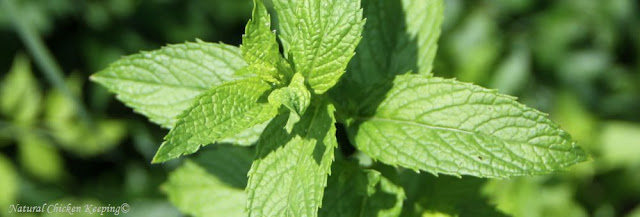
Mint-
Peppermint- digestive tonic, antiseptic, pain relieving, calms upset stomach,
Spearmint- Good for relieving cold symptoms, headaches, great for indigestion


From The Farm Blog Hop

Wildcrafting Wednesday Blog Hop

*

Tuesday, June 18, 2013

The Benefits of Garlic, Cayenne and Apple Cider Vinegar for Your Flock


By Aussie Contributor, "chooks4life"

Garlicis high in sulfur which is toxic to the parasites that plague chickens as well as other animals. They physically cannot process it. It also speeds healing. The level of sulfur an animal can take is linked in large part to its size, and it takes a lot to overdose chickens. You'd need to be either force feeding it by drench, or feeding it to severely liver-damaged birds to harm them from it. When chickens have been on garlic for a while they can't become overrun by mites, lice, or worms as garlic permeates the flesh. It also helps fend off many diseases and harmful microorganisms as they too cannot tolerate levels of sulfur that are harmless to the birds.


The sulfonamide family of drugs was developed to mimic the medicinal qualities of naturally occurring sulfur compounds in herbs - particularly garlic. But these synthetic or other man-made/altered compounds are not as effective as the natural alternative (garlic), in part because the natural alternative already possesses the proper balance with the necessary enzymes to be properly digested. Thus, mono-gastric organisms can make full use of it. Also, garlic is "fluid" and never the same in natural form, so viruses and bad bacteria cannot become immune to it like they do to stabilized/ pharmaceutical grade antibiotics and sulfur compounds which do not change.

The main known antibiotic in garlic is Allicin and this is proven to kill food poisoning bacteria among others that man made antibiotics cannot kill. Unlike man made antibiotics, the natural alternatives do not kill good bacteria too, only the harmful types. Russians refer to garlic as “Russian penicillin” and worldwide it is in much usage. I can personally vouch for it having saved my life and I cannot count how many times it's saved the lives of my poultry; I have never had respiratory diseases among them and chicks fed garlic from day one never get coccidiosis nor the majority of other diseases chicks are prone to. This is especially important in those diseases which require buildup of bad bacteria in the gut to take hold, but are kept in check by healthy intestinal micro-fauna/flora. Keep in mind there are many types of garlic, many modern breeds also, and some are more potent than others. 

Link: What the National Institutes of Health says about Garlic. 


Apple Cider Vinegar (ACV) helps maintain a correct PH which is crucial to preventing health issues, to healing everything from cancer to infections, and contains electrolytes, pro- and pre-biotics, vitamins, enzymes and minerals. The pectin in apples is one of the main heavy metal detoxifiers, relevant especially to mercury, lead and aluminum. 

Link: More on Apple Cider Vinegar.

 
Cayenne pepper - I will give a quick sample of how it works in some circumstances: some diseases that cayenne pepper is used to prevent involve worm cysts that are infected, (blackhead) and these are activated by the stomach acid once eaten. If cayenne is also eaten, it literally burns the now unprotected parasite and the protozoan disease that may have hitchhiked in there with it. It is also great for removing established adult tapeworm, as garlic takes longer as the sulfur has to build up to do its job, whereas cayenne burns the worms until they cannot feed and will evacuate the host to seek other “pastures.” 

Link: Human uses of Cayenne Pepper. 

Cheers! chooks4life

*

Monday, April 8, 2013

Prolapsed Vent (Cloaca) and Laying Problems in Hens


By Vicki -


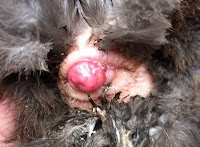
A prolapsed vent on a laying hen occurs when there is degeneration to the muscular system responsible for laying - it is a form of herniation. There are a number of possible reasons a hen can develop a prolapsed vent; it can occur when the shell of eggs is not forming properly due to a lack of calcium. Soft shelled eggs are harder to pass through the oviduct and can cause this strain injury. Hens can also be more prone to this injury if they are being forced to continue laying beyond their natural laying cycle (by using lamps to force laying in the sorter days of winter). A hen may also have issues with her conformation that make her more prone to develop a prolapse (pinched tail, wry tail and other bone or muscular issues).

(Photo credit to armorfirelady)


 To help prevent a prolapsed vent:
1) Provide enough space for the hens to walk and scratch. This retains the muscle health of the hen.
2) Allow your flock to follow a natural laying cycle by not lighting the coop in the winter.
3) Provide a free-choice calcium supplement in its own container.
4) I have also read that common weed, Shepherds Purse (Capsella bursa-pastoris), provides a general boost to chicken health.
5) Provide a good diet.
6) Provide plenty of sunshine and fresh air.

However, if your chicken already has a prolapsed vent (signs: swollen red bottom, blood, egg oozing from cloaca, other hens pecking at her vent), you have to treat her. 

 (Photo credit to armorfirelady)

There are common and effective ways to treat your hen. The first step is to remove the hen from the flock to prevent cannibalization. Reduce the hens feed (or even don’t feed her for one day) to interrupt laying. This will give her a much needed break in laying. I never recommend adding lights to induce laying. If your birds are not laying there is a reason.

 (Photo credit to armorfirelady)

Effective herbal care:
Wash the protruding organ in lukewarm water and using a natural oil (linseed oil or sweet oil), gently press the vent back into the body. Repeat several times as needed. Then wipe the vent area with a cloth or cotton ball that has been soaked in witch hazel (Hamamelisvirginiana).

Witch hazel is an astringent and anti-inflammatory that tightens skin, soothes, reduces swelling. It is used, among other things, to relieve the pain of hemorrhoids and bruises.


Effective non-herbal care:
Wash the protruding organ in lukewarm water and using petroleum jelly, gently press the vent back into the body. Repeat several times as needed. Then treat the vent area with a combination of Preparation H and antibiotic ointment. Preparation-H reduces the swelling tissue and allows the tissue to recede.

Continue these steps until the hen is healed. 

 (Photo credit to Bee)

In the event of a severe prolapse (if you truly do not wish to cull the bird), a purse suture to the cloaca may be needed. Contact your local veterinarian to find out if they can provide this procedure.  If it happens a second time, I personally would cull the as it will likely be a continuing problem for the life of the bird.

- Vicki